
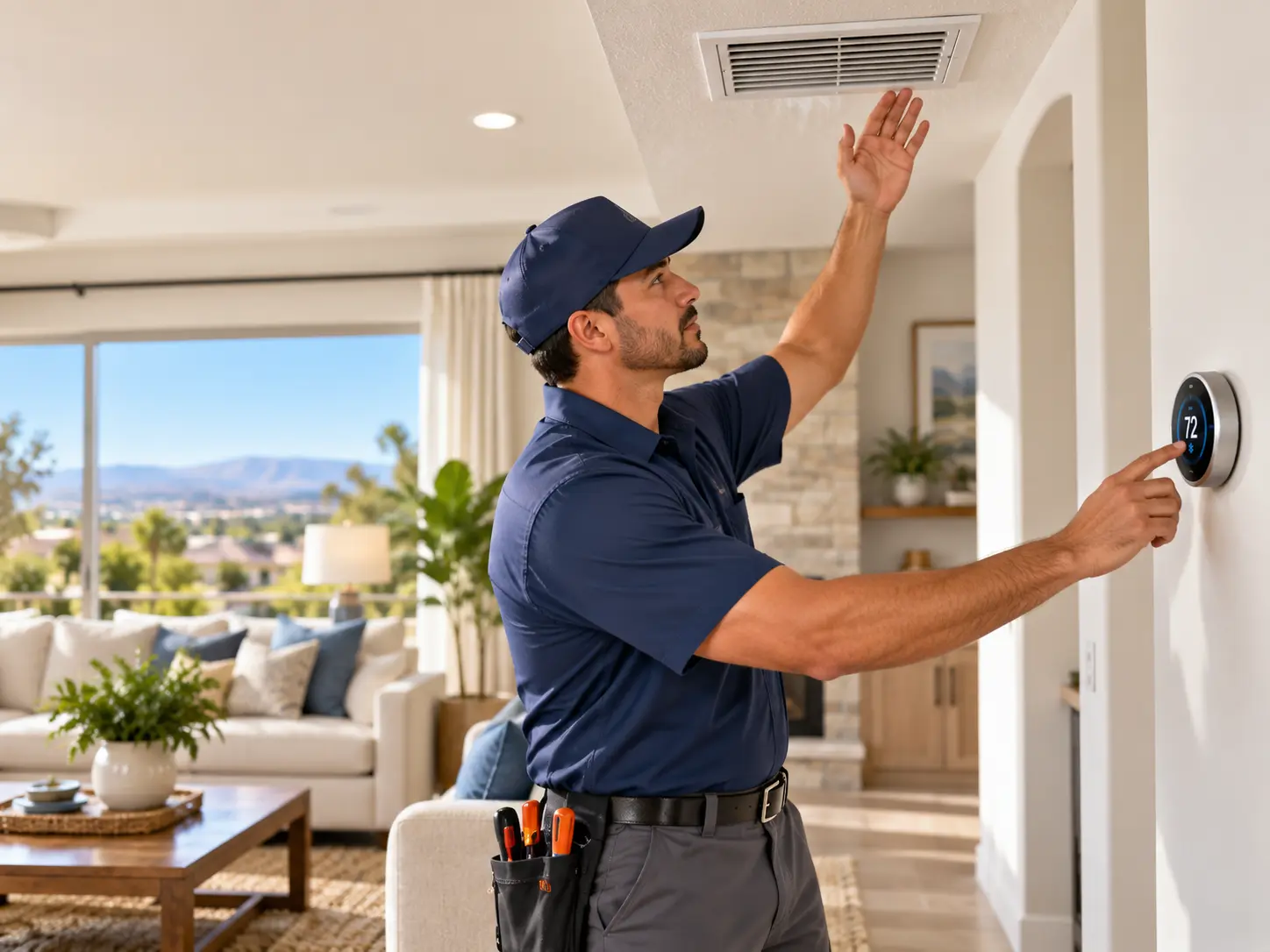
Symptoms that point at the thermostat
- Blank or unresponsive display
- Room temperature reading that clearly disagrees with a separate thermometer
- System runs when it should be off, or ignores the setpoint
- Cooling never starts even though the equipment has power
- Very short cycles caused by placement or differential settings
- Schedules or holds silently overriding manual changes
- Problems that began right after a DIY thermostat swap
Placement matters more than people expect
A thermostat reports the temperature of the air touching it, not the average temperature of the home. Mount it on a sun-exposed wall, near a lamp, above a heat-producing appliance or in the direct path of a supply register, and it will make poor decisions.
In Laredo, west-facing walls take significant afternoon solar load. A thermostat there can call for cooling long after the rest of the house is comfortable, driving up runtime and utility cost while making the system look faulty.
Safe checks
- Replace batteries if the model uses them
- Confirm mode is COOL, fan is AUTO and setpoint is below room temperature
- Cancel any active schedule, hold or vacation mode
- Compare its reading against a separate thermometer placed nearby
- Note whether the display went blank at the same time the system stopped — that suggests a control-power problem, not the thermostat itself
Wiring and the C-wire question
Many smart thermostats need a common wire to power themselves continuously. Older homes often have thermostat cable without a spare conductor. Installers solve this with an added conductor, an adapter kit, or by selecting a model designed for the wiring present.
Systems that misbehave after a smart thermostat installation frequently have a power-stealing or wiring configuration issue rather than a defective thermostat. A provider can verify terminal-by-terminal what the equipment expects.
When the thermostat is not the problem
A blank thermostat can be the visible end of a bigger issue: a tripped condensate float switch, a blown low-voltage fuse on the control board, or a failed transformer. Replacing the thermostat in that case fixes nothing. This is why a technician checks whether 24V control power is present before recommending a new control.
Cost expectations
Thermostat work generally falls in a range around $150–$350 by general 2026 national benchmarks, depending on whether a basic or smart model is used and whether wiring changes are needed. It is one of the least expensive paths to better comfort and runtime control when the existing thermostat is genuinely at fault.