
What a capacitor does
Motors in an air conditioner need a strong electrical push to overcome inertia at startup, and a steady phase shift to run efficiently afterward. The capacitor supplies both. Many residential systems use a dual-run capacitor that serves the compressor and the condenser fan from one component.
Because it stores electrical charge, a capacitor can hold dangerous energy even after the power is switched off. This is the reason every safety guide says the same thing: do not open the electrical compartment and do not attempt to test or discharge it.
Symptoms of a failing capacitor
- A humming outdoor unit where nothing spins
- The condenser fan starting only if given a push (a classic sign — and not something to attempt yourself)
- Cooling that quits during the hottest part of the day and returns after the unit cools down
- Clicking from the contactor followed by an immediate shutdown
- A breaker that trips when the system tries to start
- A visibly swollen, domed or leaking capacitor top, sometimes visible in a technician's photo
Why they fail faster in South Texas
Capacitors are heat-sensitive components mounted inside a metal cabinet that sits in full sun. Extended run times during long Laredo cooling seasons mean more hours at elevated temperature, and heat is the primary driver of capacitor degradation.
Voltage fluctuations and storms can also stress them. This is why capacitors are among the most frequently replaced parts on residential systems in hot climates, and why testing them is a standard part of a seasonal tune-up.
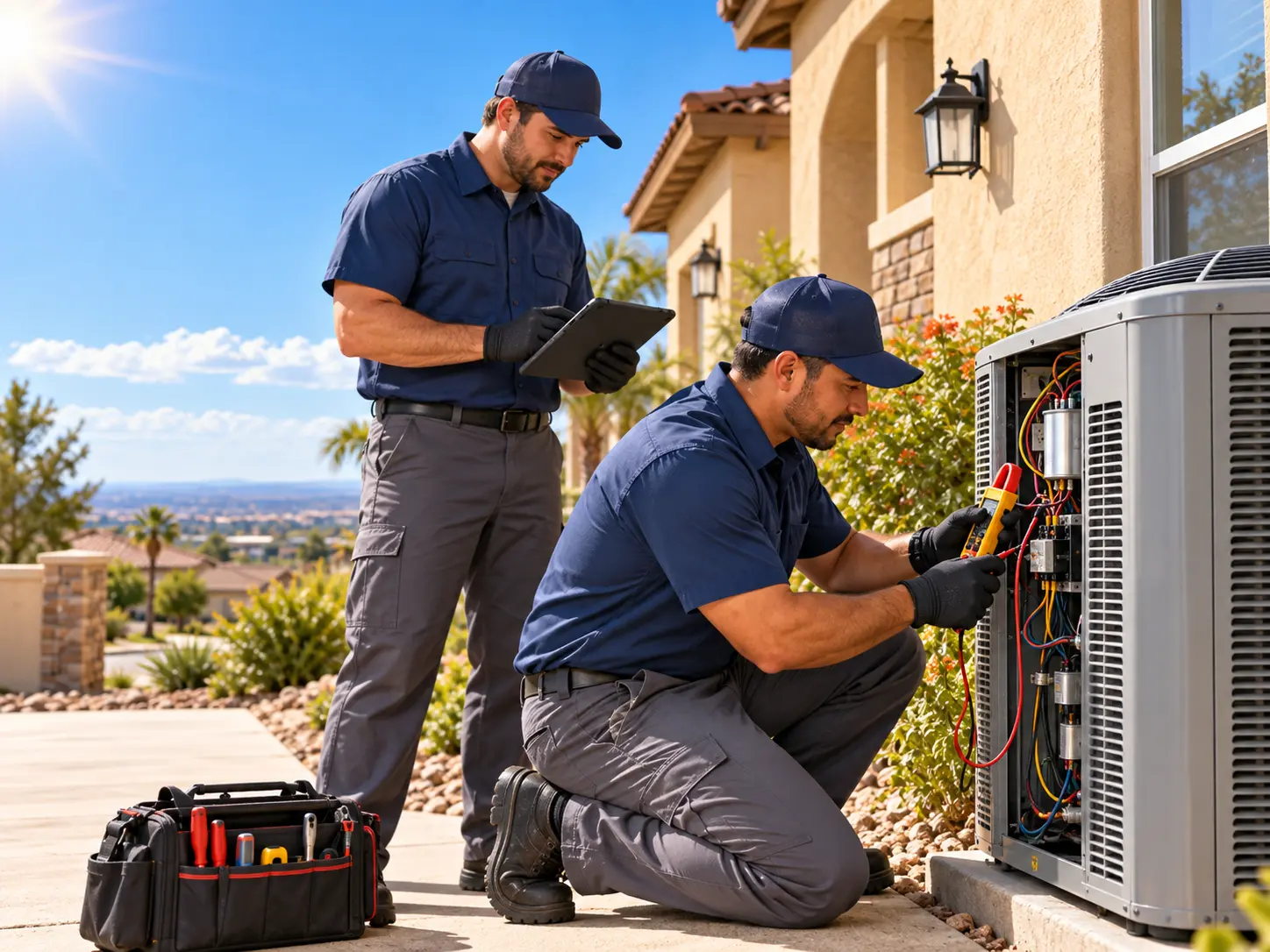
What a technician does
- Confirms the symptom and verifies power is present at the unit
- Safely isolates power and discharges stored energy with proper tools
- Measures capacitance against the rating printed on the part
- Replaces with a component matching voltage rating and microfarad value
- Inspects the contactor and wiring, since a pitted contactor often accompanies capacitor failure
- Verifies compressor and fan amperage after the repair
Cost expectations
Capacitor replacement is typically at the low end of AC repair costs, generally in a range around $100–$250 based on general 2026 national repair benchmarks. Actual Laredo pricing depends on the provider, the part rating, whether a contactor is replaced at the same time, and when the service occurs.
If a provider recommends replacing several components at once, ask which measurements led to each recommendation.
Can a bad capacitor damage other parts?
Yes. Running a compressor with a weak capacitor increases current draw and heat in the motor windings. Repeated hard-start attempts wear the compressor and can eventually contribute to failure. Catching a weak capacitor during maintenance is far cheaper than replacing a compressor.