
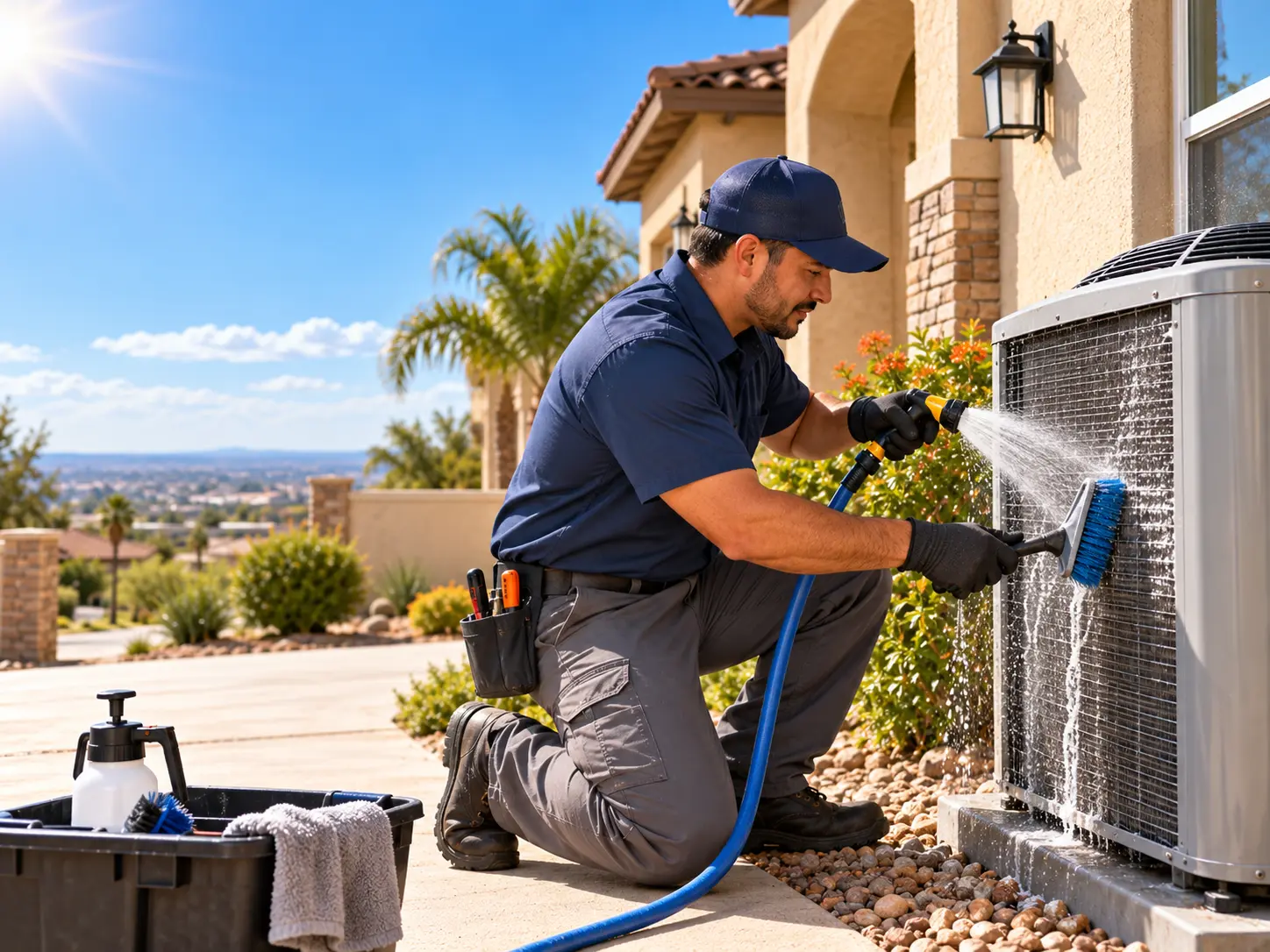
Why maintenance pays off here
The National Weather Service 1991–2020 climate normals show a July normal maximum near 99.9°F for Laredo. That translates into equipment running long hours for months rather than weeks.
Under those conditions, small inefficiencies compound. A condenser coil coated in dust raises head pressure all summer. A marginal capacitor gets hotter each afternoon. A partially blocked drain becomes a ceiling stain. Maintenance interrupts those trajectories before they become breakdowns during the hottest week of the year.
What professional maintenance typically includes
- Cleaning the outdoor condenser coil and clearing the cabinet
- Inspecting and cleaning the evaporator coil surface where accessible
- Checking and clearing the condensate drain, pan and float switch
- Testing capacitors, contactors and electrical connections
- Measuring compressor and motor amperage against nameplate values
- Verifying refrigerant performance through temperature and pressure readings
- Checking blower operation, filter condition and airflow
- Reviewing thermostat operation and calibration
What homeowners can do between visits
- Check the filter monthly during peak cooling and replace when loaded
- Keep two to three feet clear around the outdoor unit
- Rinse loose dust and grass off the exterior of the condenser with a garden hose
- Keep supply registers and return grilles unobstructed
- Watch for water, ice, unusual noise or a sudden change in runtime
Filters: the highest-leverage habit
Filter neglect causes more preventable AC problems than any other single factor. A restricted filter reduces airflow, which lowers coil temperature, which creates ice, which blocks airflow further. It also lets dust bypass into the coil, where it becomes a professional cleaning job instead of a five-dollar swap.
Regional dust and grit mean many Laredo homes need shorter filter intervals than a package label suggests. Check rather than assume.
What maintenance cannot promise
Maintenance reduces the likelihood of failure and preserves efficiency. It does not guarantee that a component will not fail, and it cannot restore capacity to equipment that is genuinely worn out. Treat it as risk reduction and performance preservation, not insurance.
Timing
Scheduling before peak season is ideal, because appointment availability is easier and any needed repair can be handled before you depend on the system daily. If you have not had service in more than a year and cooling season has already begun, it is still worth doing.