
Work through it in order
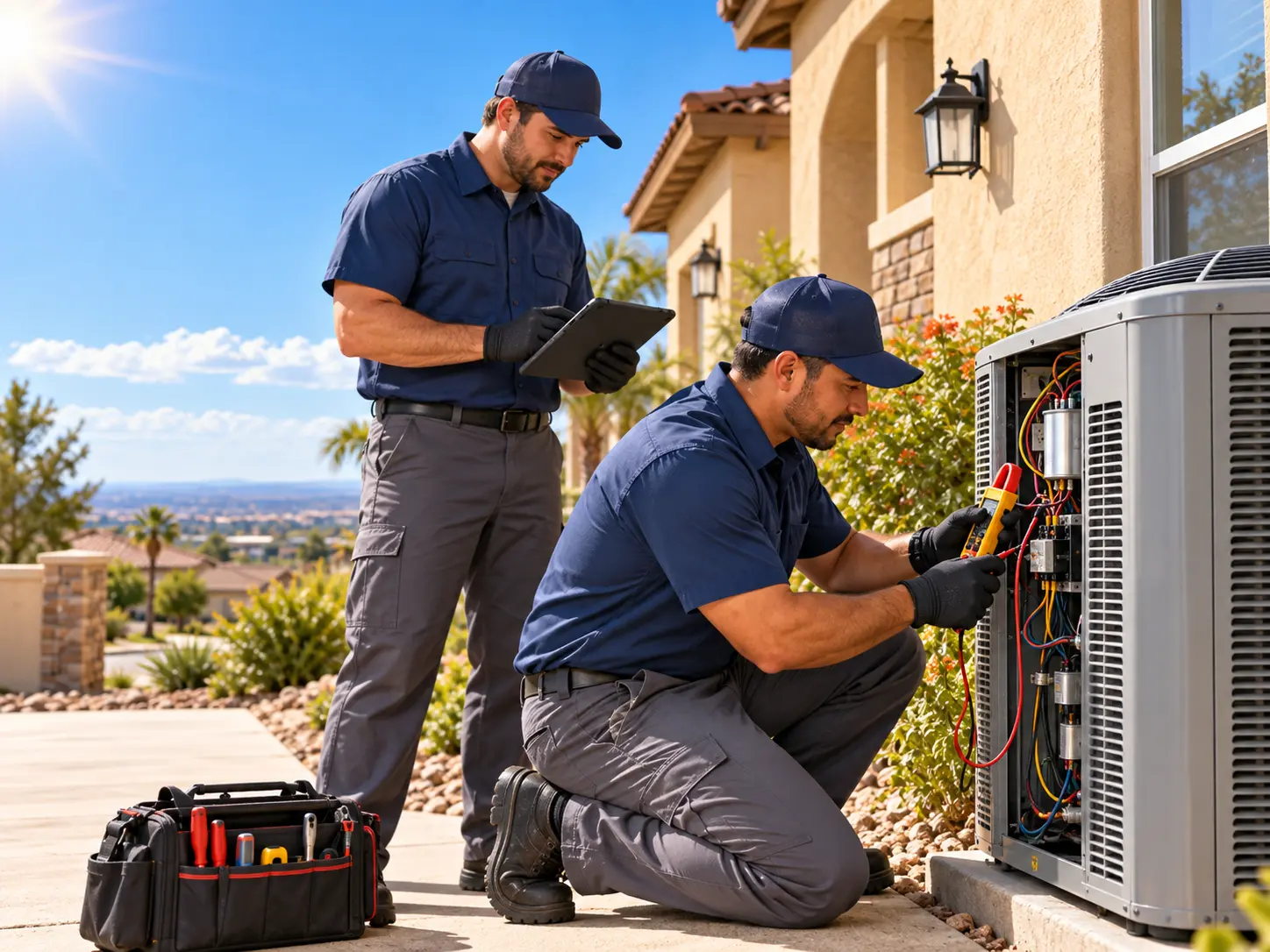
Diagnosing a no-start follows a logical chain: is the thermostat calling for cooling, is low-voltage control power present, is line voltage reaching the equipment, and are the startup components able to bring the compressor and motors online. Each link has a different failure mode.
Homeowners can safely inspect the first link and part of the second. The rest requires meters and live-circuit access.
Common causes
- Dead thermostat batteries or a blank thermostat display
- Breaker tripped at the panel, or the outdoor disconnect pulled
- Condensate float switch opened because the drain line is blocked — a very common Laredo cause in humid stretches
- Blown low-voltage fuse on the control board or a failed transformer
- Failed run capacitor so the compressor and fan cannot start
- Contactor pitted or stuck so line voltage never reaches the compressor
- Blower motor or control board failure at the air handler
The float switch nobody expects
Most modern installations include a safety switch that cuts the cooling call when the condensate drain backs up. It exists to prevent ceiling and drywall damage. When it opens, the system appears completely dead even though nothing is broken electrically.
If your system stopped with no warning and you also notice water near the indoor unit, damp insulation, or a musty smell, the drain is a strong suspect. Clearing it restores operation, and it is inexpensive relative to the water damage it prevents.
Safe checks
- Replace thermostat batteries if the model uses them
- Confirm the thermostat is set to COOL with the setpoint below room temperature
- Check the breaker panel for a breaker sitting between ON and OFF and reset it once
- Look for standing water in the drain pan or around the indoor unit
- Confirm the service switch near the air handler (often looks like a light switch) has not been turned off
What not to do
Do not reset a breaker repeatedly. A breaker that trips again is reporting a fault, and forcing it back on can damage equipment or create a fire risk. Do not open the outdoor electrical panel, test or discharge a capacitor, jump a contactor, or bypass a safety switch. Those actions carry serious shock and burn risk and can void manufacturer coverage.
How the diagnosis usually goes
- Verify the thermostat call at the control board
- Confirm 24V control power and inspect safety switches in the circuit
- Verify line voltage at the disconnect and the contactor
- Test the capacitor under load and inspect the contactor contacts
- Check compressor and motor windings if the components upstream test good
Cost expectations
Startup-component repairs are among the least expensive AC repairs. Control boards, transformers and blower motors sit higher. If a compressor is found to be electrically failed, the conversation shifts toward replacement economics, especially on older equipment.