
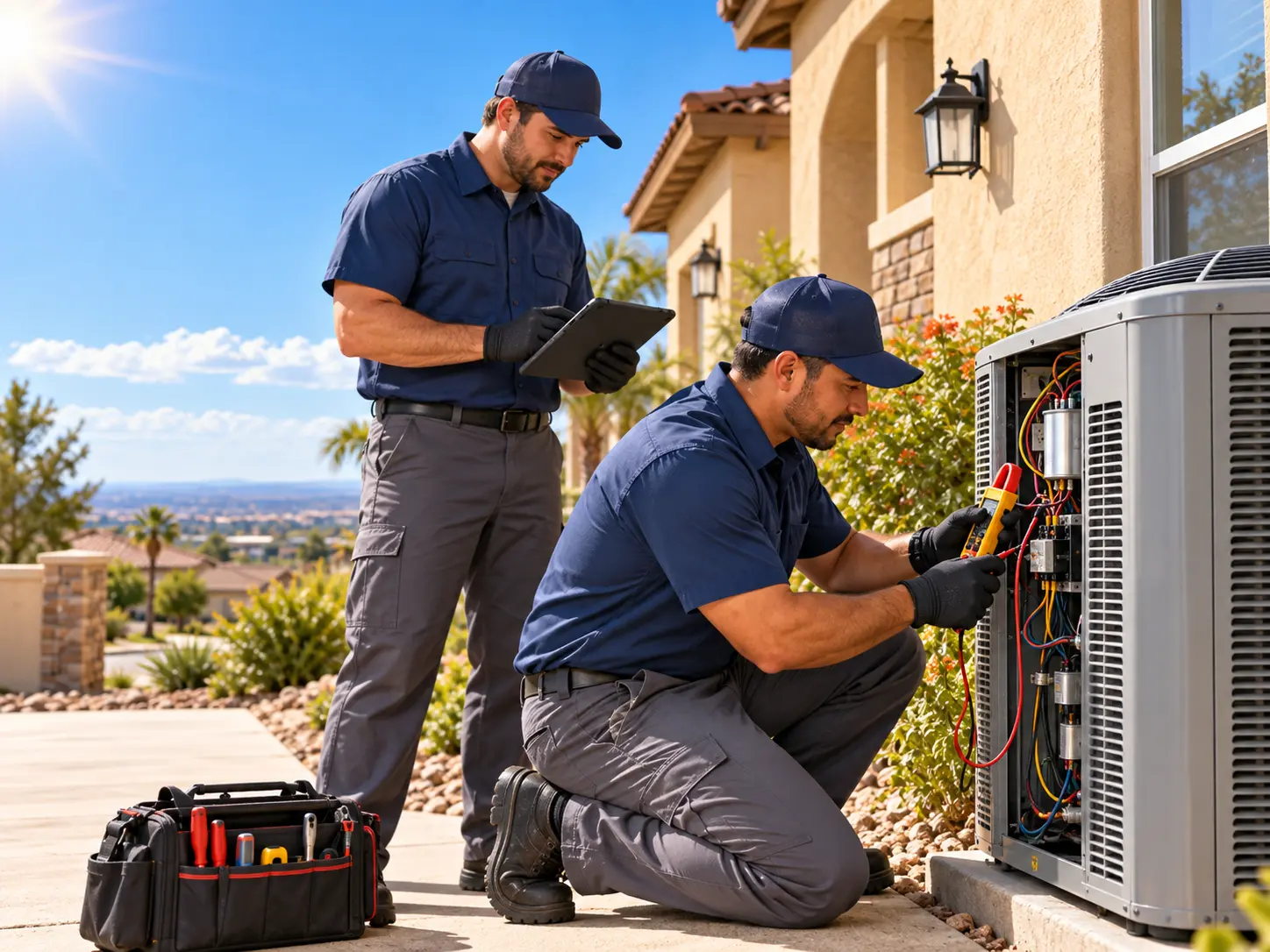
What the compressor actually does
The compressor raises the pressure and temperature of refrigerant vapor so it can release absorbed heat outdoors. Without it, refrigerant simply sits in the loop and no cooling occurs. It runs for thousands of hours per season in South Texas, which is why heat, electrical stress and lubrication matter so much to its lifespan.
Warning signs
- Loud grinding, screeching or metallic rattling from the outdoor unit
- The unit humming loudly for a few seconds then shutting off
- Breaker tripping the moment the compressor attempts to start
- Warm air at the vents while the condenser fan spins normally
- Noticeably higher electric bills alongside declining cooling
- Repeated tripping on internal thermal overload during hot afternoons
Things that look like compressor failure but are not
Before accepting a compressor diagnosis, it is reasonable to ask what was measured. A weak run capacitor prevents starting. A failed contactor prevents power delivery. A restricted condenser causes high-pressure trips. Low charge causes overheating and overload trips. Each produces symptoms a homeowner would describe as 'the compressor is dead'.
A thorough technician distinguishes these with capacitance measurement, amperage readings, winding resistance tests and pressure readings, not by symptom alone.
Common causes of genuine compressor failure
- Liquid refrigerant returning to the compressor after repeated coil freezing
- Extended operation with a low charge, which reduces cooling of the motor windings
- Electrical faults, voltage problems or a chronically weak capacitor
- Restricted condenser airflow causing sustained high discharge temperatures
- Lubrication breakdown after years of high-load operation
- Contamination introduced by a previous improper repair
Repair versus replacement economics
Compressor replacement is a major job: recovery, component swap, filter drier replacement, deep vacuum and a full weighed charge. General 2026 national benchmarks place compressor work in a broad range around $800–$3,000, and pricing rises with refrigerant type and system size.
On equipment near the end of its useful life, that expense buys a new compressor inside an aging system with an aging coil and an aging outdoor cabinet. Many homeowners in that position price a full replacement alongside the repair. On newer equipment — especially if manufacturer parts coverage still applies — repair often makes clear sense.
Questions worth asking
- What measurements confirmed the compressor itself has failed?
- Is the compressor covered by any remaining manufacturer parts warranty?
- Will a filter drier be installed and the system evacuated properly?
- What is the total installed price for a comparable replacement system?
- What caused the failure, and will that cause be corrected?
Protecting a healthy compressor
Keep airflow unrestricted, keep the condenser clean, address coil freezing immediately, and have capacitors tested seasonally. Most compressor failures are downstream consequences of smaller problems that ran too long.